
The deal doesn’t close in the boardroom. It closes in the moment a client remembers how you made them feel, not what was on the slide deck. Increasingly, you can build this feeling through luxury experiences that leave a lasting impression long after the meeting ends.
Executives sit through hundreds of meetings a year. Pitches blur together, proposals get filed, and follow-up emails go unread. What sticks isn’t the agenda. It’s the dinner where the conversation actually got interesting, the invitation that felt personal instead of transactional, the gift that arrived because someone was paying attention. That’s the terrain where real client appreciation ideas live, and where you actually build the strongest B2B relationships.
For companies competing on relationships as much as results, understanding executive relationship building isn’t a soft skill. It’s a growth strategy.

Why Meetings Alone Don’t Build Trust
Meetings are where business gets discussed. They’re rarely where it gets decided.
At the executive level, trust and rapport carry as much weight as the numbers, because the people signing off on partnerships are betting on the relationship as much as the product. A well-run meeting proves competence. It doesn’t prove you’re someone worth staying loyal to.
Luxury corporate experiences close that gap. Outside the structure of an office setting, people talk differently. Guards come down. Executives share what’s actually keeping them up at night instead of what’s on the pre-approved talking points. That’s where the groundwork for long-term partnerships gets laid, not in the follow-up email, but in the conversation that made the follow-up email worth reading.
The Psychology of Why This Works
There’s a reason a great dinner outlasts a great presentation in someone’s memory: people forget what was said, but they remember how an experience made them feel.
A few forces are doing the work here:
- Exclusivity signals that someone was chosen, not just contacted.
- Personalization proves attention to detail and preferences, not just to the account.
- Shared experience creates a memory two people own together, which a transaction never does.
- Reciprocity means that when someone feels genuinely hosted, they tend to want to return the favor, in trust if nothing else.
None of this is manipulation. It’s just how people actually build loyalty, whether they’re choosing a vendor or a friend.
Luxury Experiences Worth Remembering
The goal isn’t extravagance for its own sake. It’s relevance, an experience that fits the guest, not just the budget.
Private dining is a good starting point. A chef’s table or a private room strips away the performative parts of a business meeting, so conversation gets real because there’s no audience.
Exclusive sporting and cultural events work too. VIP suites, a Formula 1 weekend, courtside tickets, or a night at the theater give executives hours of unstructured time together, which is exactly what a 45 minute meeting can’t offer.
Curated tastings tend to perform especially well. A guided whisky masterclass or a champagne pairing turns networking into something people actually want to attend. There’s a shared object of attention, the glass in front of them, which makes conversation easier to start and easier to sustain. A private whisky tasting paired with a few well-chosen bites does more relationship-building in ninety minutes than a follow-up call does in a month, and a well-chosen bottle from a Whisky Gifts selection is often what makes that kind of evening feel intentional rather than improvised.
Let the Beverage Support the Moment, Not Steal It
Premium spirits work best as a supporting detail, not the headline. A welcome glass of Champagne sets the tone before anyone’s said a word. A well-chosen whisky after dinner gives the evening a natural close. None of this needs to be the reason for the gathering. It just needs to be right.
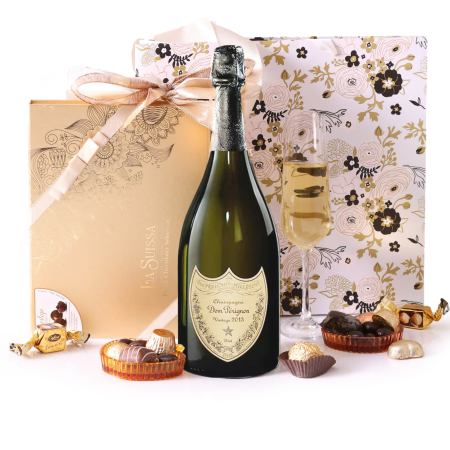
And the moment doesn’t have to end at the table. A bottle chosen from a Wine Gifts or Champagne Gifts selection, sent to a guest’s office the following week with a short, specific note referencing the evening, turns a one-time event into an ongoing gesture. It’s a small thing that does a lot of work: it says I remember this, and I meant it. That’s the difference between a corporate gift and a client appreciation idea that actually lands.
The Details That Make It Personal
Luxury isn’t a price tag. It’s relevance. And executives notice the difference immediately.
The things that actually register:
- Remembering someone’s go-to wine or spirit instead of defaulting to safe
- Accounting for dietary needs without being asked twice
- Choosing an event based on their interests, not a generic client tier
- A handwritten note instead of a printed card
- Respecting cultural and regional preferences when hosting international clients
These aren’t luxury upgrades. They’re the baseline for anyone who wants a gift or an event to read as personal rather than procedural.
What Executive Experiences Actually Return
This isn’t a channel with next day attribution. The return shows up later, and it shows up as higher client retention, more unprompted referrals, smoother negotiations, additional introductions inside the client’s own network, and longer, more durable partnerships.
Judged against a single quarter, it looks like an expense. Judged as part of a real client retention strategy, it’s one of the highest leverage investments a B2B relationship can make, because it compounds. A client who feels genuinely known doesn’t just renew. They advocate.
Bringing It Full Circle
You don’t sustain executive relationships with contracts alone. They are sustained by the handful of moments a client actually remembers, and by what a company does after those moments, when there’s nothing left to close.
A bottle sent after a hard-won project. A limited release marking a milestone. A thoughtful pick from a Luxury Corporate Gifts selection to mark a new partnership, arriving with a note that proves someone paid attention. These small follow-throughs are what separate a vendor from a partner people actually want to keep working with. For teams managing multiple clients at once, bulk ordering makes it possible to keep that same level of care consistent across an entire book of business, without every gift starting to feel like an afterthought as part of a broader corporate gifting strategy.
In a market where almost everything else is digital and automated, a genuinely thoughtful gesture stands out precisely because it’s rare. That’s the opportunity, and it’s one premium business gifts are built to meet.
FAQ
Why are luxury experiences effective for executive relationship building? They create personal, memorable interactions that build trust and rapport in a way formal meetings typically can’t, which is what actually drives long-term B2B loyalty.
What types of experiences work best with executive clients? Private dining, exclusive sporting or cultural events, and curated tastings tend to perform best because they create shared, unstructured time together.
How do premium gifts complement executive events? A well-chosen gift sent after the experience extends it, reinforcing appreciation and keeping the relationship active well after the event ends.
Do luxury experiences actually improve client retention? Yes. Companies that invest in relationship-focused experiences consistently see stronger loyalty, more referrals, and more durable partnerships over time.
Ready to Elevate Your Executive Relationships?
- Browse our corporate gifting collection and find the right bottle for your next client milestone.
- Managing gifts across a full client roster? Our bulk ordering options keep every relationship feeling personal, even at scale.
- Subscribe to our newsletter and save 10% on your first order for curated ideas on client appreciation and corporate hospitality.

Passionate about friends, family, music, soccer, gifts, travel, and lifelong learning, Otavio Ribeiro has been contributing his marketing expertise to Drinkable Gifts as Brand Manager since 2025.
A Brazilian holding dual nationality with Portugal, Otavio also has a deep love for writing. His guiding principle and favorite quote is, “Be so good they can’t ignore you.”